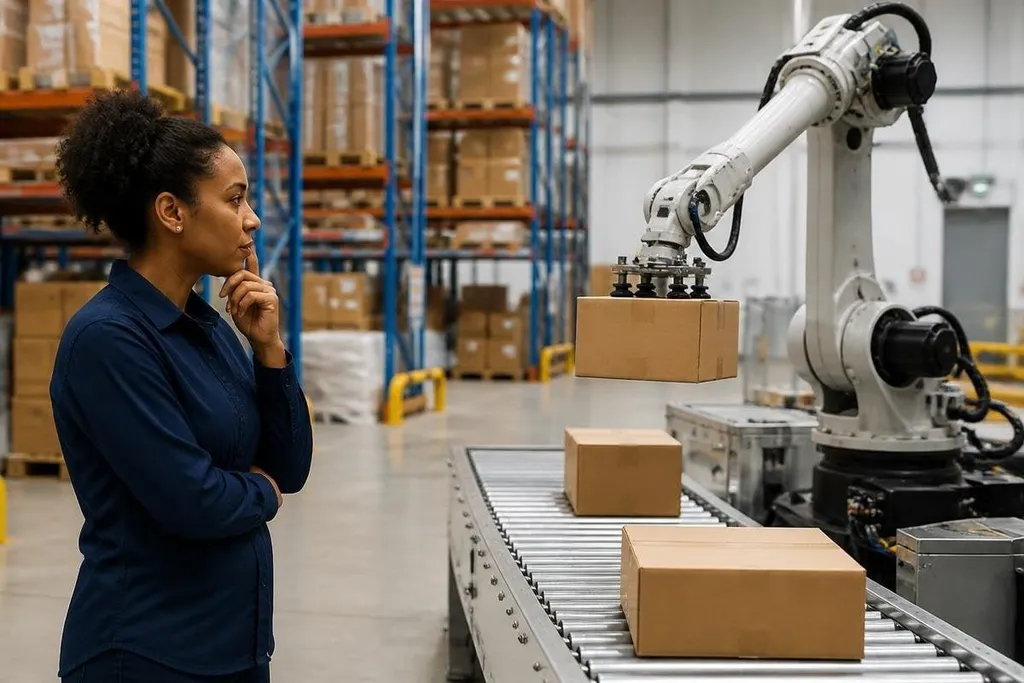
A robot can sort packages, inspect pipes, move stock, or care for a patient. The hard questions start after the machine works: who controls it, who carries the risk, and who gets the gain?
This matters to a manager buying automation, a worker sharing a site with robots, and anyone living with machines in public spaces.
Quick read
- Ask what task the robot does, and what people do after it arrives
- Set a named person for safety, data, and final decisions
- Demand a clear answer on cost, repair, failure, and removal
What job is the robot really doing?
A proposal often begins with a broad goal such as “improve efficiency.” That phrase hides the useful detail. You need the exact task, the current method, and the result the robot must reach.
Ask how many objects the robot must move, how often it may fail, and what happens when an item has an unusual shape. A machine that works on a fixed line faces a different problem from one moving through a busy building.
The job description should include the human work left behind. Someone may need to load parts, clear jams, check failed picks, or approve a decision. If the plan ignores those tasks, the price and staffing plan are incomplete.
Who gains, and who carries the risk?
The buyer may gain lower operating costs. A worker may gain relief from lifting heavy parts. Another worker may lose hours, status, or a path to a better role. Those effects can appear in the same deployment.
Ask who made the decision and who can challenge it. Ask who gets training before the robot arrives, and who pays when a new skill is needed. A fair plan names those people rather than treating the workforce as a line on a budget sheet.
Safety needs the same plain treatment. Who can stop the robot? Can they reach the emergency stop from the normal work position? Who checks the area after a software change, a sensor fault, or a collision?
A safe system also needs a failure plan. The plan should state how the robot stops, how people report a problem, and how work resumes without pushing someone into an unsafe manual task.
What happens to the data?
Many robots collect images, audio, location data, or records about the tasks they perform. That data can help a team find faults, but it can also reveal details about workers, customers, homes, or restricted areas.
Ask what the robot records, where the files go, how long they stay there, and who can view them. Ask if the system can run with less data. A camera aimed at a package is a different privacy problem from a camera that records people all day.
The contract should name the data owner and the person who handles a breach. It should also explain what happens when the service ends. Deleting an account does not answer where old copies, logs, or backups remain.
Before you put a price on a robot, check what the quoted task leaves out: setup labor, repairs, software fees, and data storage. Robot24.com gives you named machines and test details to compare with those costs.
What will the machine cost after purchase?
The purchase price covers one part of the bill. You may also need installation, site changes, software access, training, spare parts, battery replacement, and staff time for faults.
Ask for the cost over the period you plan to keep the robot. Ask how often maintenance is due, which parts the supplier keeps in stock, and how long repairs usually take.
A machine that sits idle while one imported part travels across a border can change the whole plan.
You should also ask how the robot leaves. Can you remove it without rebuilding the site? Can another system use the same data? What happens if the supplier closes, changes its fees, or ends support for the model?
I would delay a purchase when the seller can describe the demo but cannot explain repair, data removal, and failure response.
A buying checklist
Use these points in a meeting before you approve a robot:
- Name the task: write the job in measurable terms, including speed, load, and allowed errors
- Map human work: list who loads, checks, repairs, stops, and signs off the system
- Test bad cases: run empty loads, blocked paths, unusual objects, lost signals, and power loss
- Set data rules: record what is collected, who sees it, where it stays, and when it is deleted
- Price the full term: include service, training, parts, downtime, software fees, and removal
- Write the exit plan: state how people return to manual work and how the robot leaves the site
The next step is a small, measured trial with a named owner and a written stop rule. Before robots become common, the better question is not how many machines a site can add. It is whether the people around them can explain what happens when the machine is wrong.